
How to Ceramic Coat a Car: Step-by-Step Guide
Table of Contents
Ceramic coating a car means washing, decontaminating, and machine-correcting the paint before applying a liquid polymer in thin, overlapping panels with a foam applicator, then letting it cure for 24 to 48 hours before the first wash. DIY kits typically run $50 to $120 for the product alone, while full prep and correction add significant time and cost.
Key Takeaways
- Ceramic coating requires 4 core steps: wash, decontaminate, correct, and coat, in that exact order every time.
- Most consumer-grade coatings cure within 24 to 48 hours but reach full hardness after 7 to 14 days.
- A single DIY layer typically protects paint for 6 to 12 months, versus 3 to 10 years for professional-grade systems.
- Skipping paint correction locks swirl marks and scratches under the coating for its entire lifespan.
- Ceramic coating typically must be leveled and wiped off within 1 to 5 minutes of application, its flash time.
What Materials Do You Need to Ceramic Coat a Car?
A complete ceramic coating job requires a two-bucket wash kit, a clay bar or clay mitt, an isopropyl alcohol (IPA) panel wipe, foam and microfiber applicators, the ceramic coating product itself, and several clean microfiber leveling towels.
Most DIY coating kits include the applicator and leveling towels in the box, but the wash and decontamination supplies are sold separately. Buying a dedicated set of microfibers just for coating work matters here, since any towel that has touched wax, sealant, or silicone-based dressing can contaminate the panel and cause the coating to fail to bond.
How Do You Prep a Car Before Ceramic Coating?
Proper prep starts with a full decontamination wash, an iron remover treatment, a clay bar pass, and paint correction to remove existing swirl marks before any coating touches the surface.
A ceramic coating bonds to whatever is on the paint at the moment of application, so any embedded contamination, oxidation, or defect gets sealed in for years. The prep sequence typically runs:
- Pre-rinse and foam wash to lift loose dirt without grinding it into the clear coat.
- Iron remover application to dissolve embedded brake dust and rail dust that a normal wash won't touch.
- Clay bar or clay mitt pass to pull remaining bonded contaminants off the surface.
- Paint correction (single or multi-stage machine polishing) to remove swirl marks and light scratches.
- IPA panel wipe immediately before coating, to strip any polishing oils so the coating can bond directly to bare paint.
Skipping any of these steps is the single most common reason a DIY ceramic coating job fails to bond evenly or delivers a shorter lifespan than expected.
How to Apply Ceramic Coating to a Car
Applying ceramic coating comes down to working one small, shaded section at a time, wiping the product on in a controlled cross-hatch pattern, and leveling off high spots within the product's specified flash time, usually 1 to 5 minutes depending on temperature and humidity.
How to apply ceramic coating correctly starts with panel size, not speed. Coat one panel, such as a hood or a single door, rather than the whole car at once, since most coatings need to be leveled and buffed off before they flash and become difficult to remove. Apply 2 to 3 drops of product onto the applicator, spread it in overlapping horizontal and vertical passes, then wait for the surface to show a light rainbow "halo" before wiping the residue off with a clean microfiber towel. Work in the shade, in low humidity, and at moderate temperatures, since direct sun causes the coating to flash almost instantly, which leads to visible high spots and streaking that are difficult to correct once cured.
How Long Does Ceramic Coating Take to Cure?
Most ceramic coatings reach a dust-free, light-rain-safe state within 24 to 48 hours, but full chemical cross-linking and hardness typically take 7 to 14 days.
During that curing window, the vehicle should stay out of rain, avoid automated car washes, and skip any wax or sealant on top of the coating. Garage or covered storage during the first 48 hours significantly reduces the risk of water spotting before the coating has fully hardened. These cure-time ranges vary by product and manufacturer, so it's worth checking the specific coating's data sheet rather than relying on a single universal number.
DIY vs. Professional Ceramic Coating
Professional ceramic coating costs 10–20× more than a DIY kit upfront, but lasts 3–5× longer and includes the decontamination, correction, and controlled environment that determine how long the coating actually holds.
| Factor | DIY Ceramic Coating | Professional Ceramic Coating |
|---|---|---|
| Typical cost | $50 to $120 (product only) | $600 to $2,500+ (all-in) |
| Protection duration | 6 to 12 months | 3 to 10 years |
| Paint prep included | No (DIY responsibility) | Yes (decontamination + clay bar) |
| Paint correction | Not included | Included above entry-level tiers |
| Application environment | Home garage or driveway | Climate-controlled, dust-free bay |
| Risk of high spots/streaking | Higher without practice | Lower (trained technician) |
Note: DIY figures above are general industry ranges, not manufacturer-confirmed statistics, and actual results vary by product and installer skill.
What Mistakes Ruin a DIY Ceramic Coating Job?
The most common DIY ceramic coating mistakes are applying the product in direct sunlight, skipping paint correction, using too much product per panel, and exposing the car to rain or automated washes during the cure window.
Applying in direct sun causes the coating to flash before it can be leveled, leaving visible high spots that require machine polishing to remove. Over-application creates the same problem even in ideal conditions, since excess product has no clear coat left to bond to and simply sits on the surface as residue. Skipping correction is the costliest mistake of all: a coating applied over swirled paint locks those defects in for the life of the coating, whether that's 1 year or 5.
Should You DIY or Hire a Professional Ceramic Coating Installer?
The decision comes down to three factors: paint condition, available time and equipment, and how long the protection needs to last.
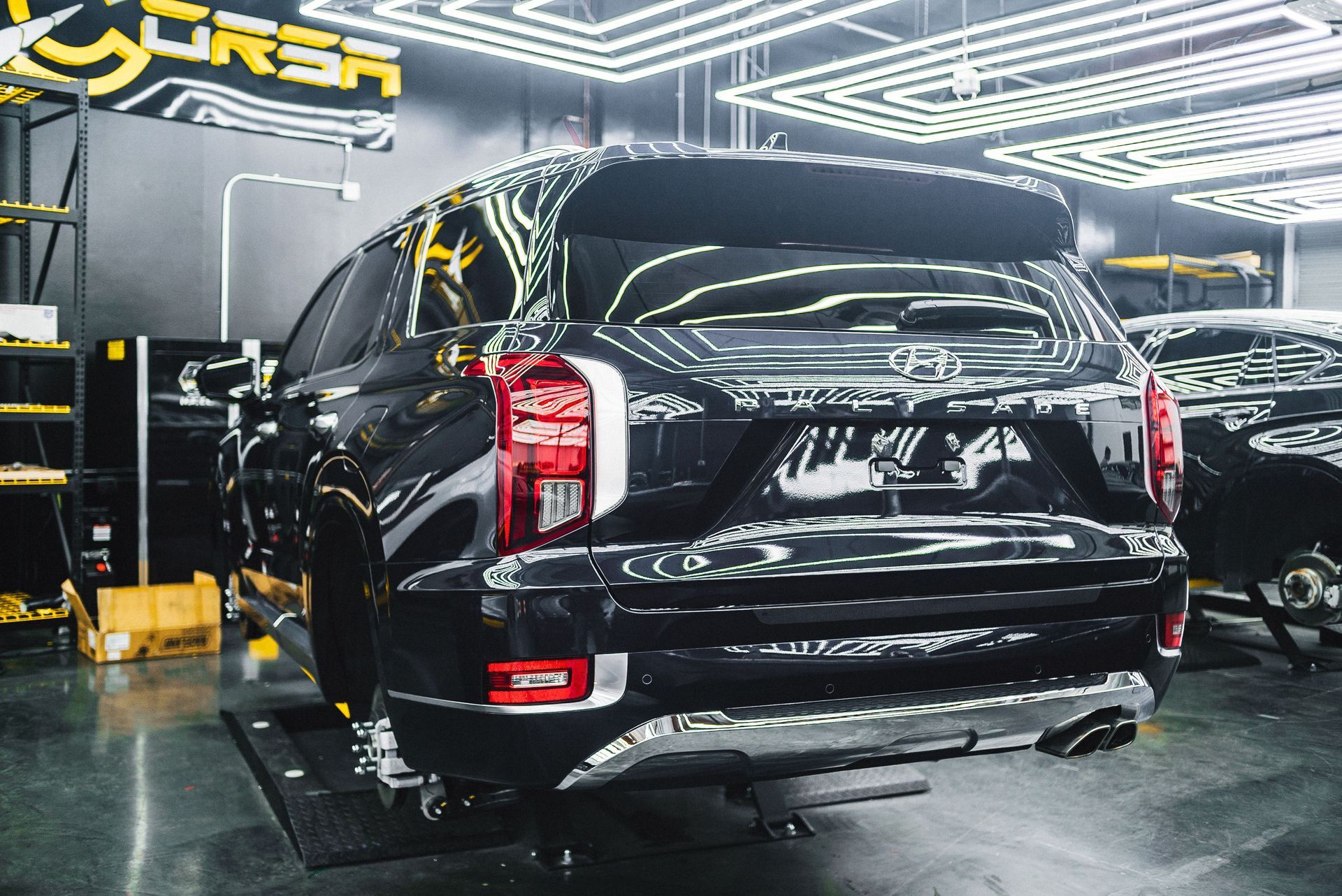
Paint condition matters most. Swirl marks, scratches, and oxidation need correction before coating, not sealing in under it. DIY kits skip correction entirely, so defects still show through, just glossier. Professional installers correct defects under dedicated lighting before coating.
Equipment, time, and ceramic coating cost over the long run also favor professionals. Ceramic coating needs a shaded, dust-free space that most home garages struggle to provide, and multi-stage correction requires tools most first-timers don't own. A full DIY application takes a full day, versus 1 to 3 days professionally, and needs reapplying every 6 to 12 months, while a professional coating can last 3 to 10 years.
As a general rule, daily-driven cars with minor or no defects suit DIY. Cars with visible swirl marks, or owners wanting a multi-year, warrantied result, are better served by professional correction and application.
Not sure whether your paint needs correction before coating, or which tier fits your car? Send us 2 or 3 of your current vehicle's latest photos under bright light, and our team will tell you honestly whether a Daily Driver, Car Enthusiast, or Show Off package fits your car, no upsell, no guesswork.
Maryland Clean Rides provides
professional
ceramic coating service in Westminster, MD, built around what your paint actually needs rather than a one-size-fits-all package.
FAQs
How long does ceramic coating take to cure?
Ceramic coating reaches a dust-free, light-rain-safe state within 24 to 48 hours, though full hardness typically takes 7 to 14 days, depending on the product and ambient conditions. Cars should avoid rain, automated washes, and topcoats during that window. Cure times vary by manufacturer, so checking the specific product's data sheet is worth the extra step.
How much does professional ceramic coating cost at Maryland Clean Rides?
Maryland Clean Rides prices ceramic coating in three tiers: Daily Driver at $600, Car Enthusiast at $1,300, and Show Off at $2,500. Each tier above Daily Driver includes paint correction built into the price, rather than as an add-on. SUV and truck pricing runs higher; the shop provides a specific quote per vehicle.
Can you apply ceramic coating over swirl marks?
Yes, but doing so locks those swirl marks under the coating for its entire lifespan, whether that's 1 year for a DIY kit or up to 10 years for a professional system. Paint correction before coating is the only way to remove defects rather than seal them in. This is the single most common regret among first-time DIY installers.
How often should a ceramic-coated car be washed?
A ceramic-coated car should generally be washed every 2 to 3 weeks using a pH-neutral shampoo and the two-bucket method to avoid introducing new swirl marks. Automated tunnel washes with abrasive brushes can degrade the coating's hydrophobic layer faster than hand washing. Regular washing also prevents contaminants from bonding to the coating's surface.
Does Maryland Clean Rides include paint correction with every ceramic coating package?
Maryland Clean Rides includes paint correction in its Car Enthusiast and Show Off packages, but not in the entry-level Daily Driver tier. The Car Enthusiast tier ($1,300) adds a 1-step correction, while Show Off ($2,500) includes a full 2-step correction plus coated wheels, coated windows, undercarriage coating, and interior ceramic coating. Drivers with visible swirl marks are generally better matched to one of the two higher tiers.
Is DIY ceramic coating as durable as a professional installation?
No, DIY ceramic coating typically lasts 6 to 12 months compared to 3 to 10 years for professionally applied, higher-concentration coatings installed in a controlled environment. The gap comes from both product-grade differences and installation conditions, since dust, humidity, and temperature swings in a home garage are harder to control than in a dedicated coating bay. DIY coatings can still meaningfully outperform no coating at all for a daily driver.
Last updated: July 2026
About the Author: The Maryland Clean Rides Team, led by owner David Domingues, provides Paint Protection Film installation, ceramic coatings, and paint protection services out of its shop at 150 Airport Dr Unit #12, Westminster, MD 21157. Serving the Westminster, MD area. Call (443) 300-6356 to book.